
 EN
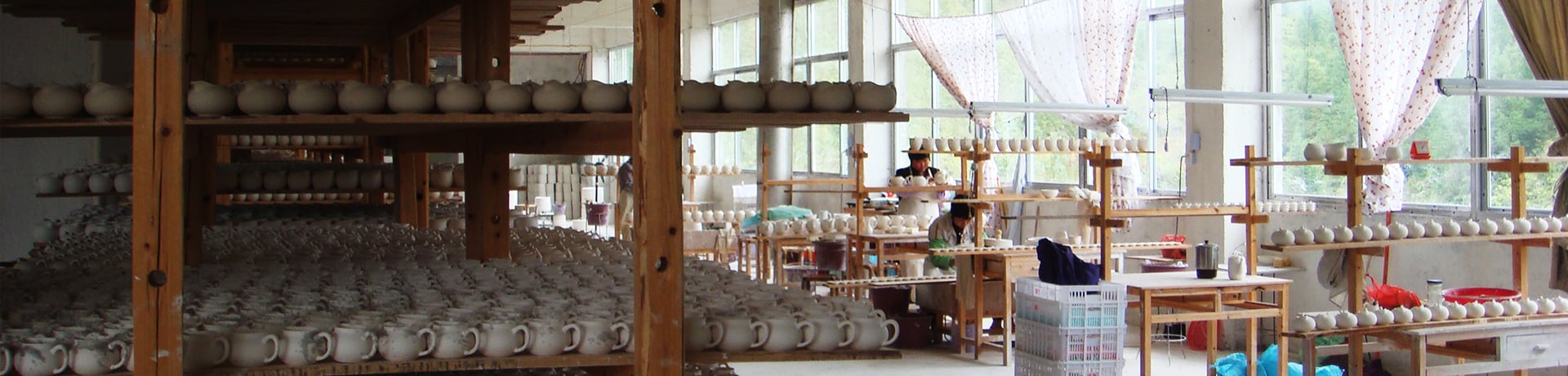
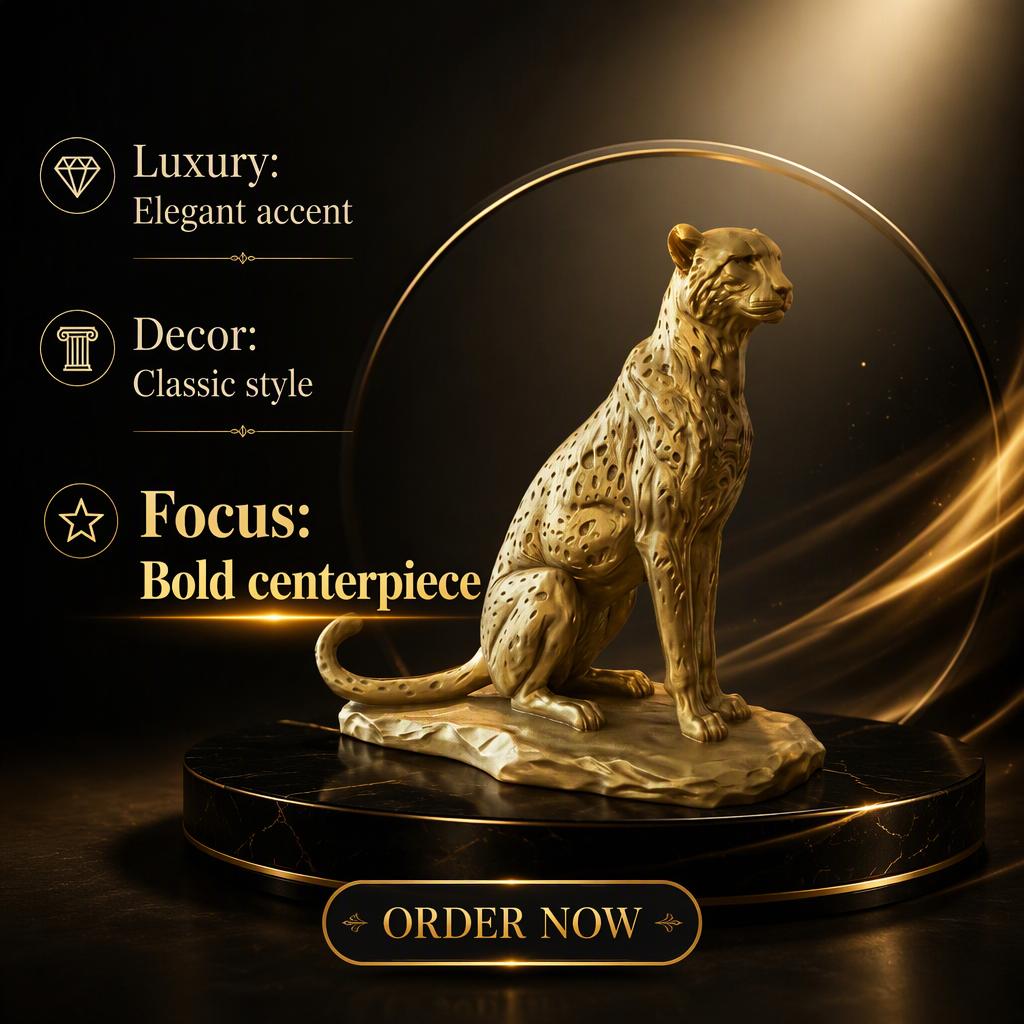
Custom Gold Resin Cheetah Statue
Project Snapshot
| Item | Detail |
| Model | W260660 |
| Product | Gold resin cheetah statue, seated, rock base |
| Material | Polyresin (resin) |
| Finish | Metallic gold coating |
| Sizes | S / M / L / custom |
| MOQ | 500 pcs |
| Volume tiers | 360–719 / 720–1,439 / 1,440+ pcs |
| Lead time | 45 days (≤720 pcs), 50 days (721–5,000), 55 days (5,001–10,000) |
| Port of loading | Xiamen, China |
| Customization | Logo, color, size, material, sample-based development |
| Certification (as listed) | LFGB |
The Brief
A home-décor buyer came to us with a category problem rather than a product problem. Their animal sculpture shelf was crowded with deer, horses and abstract forms — pieces that photograph well but no longer signal anything. What they wanted was a big cat: something that reads as expensive at a glance, works as a single hero piece on a console table, and could be scaled into a three-size ladder without three separate development budgets.
The commercial requirements were equally specific: a 500-piece opening order, one gold finish to lead the range, the option to add a branded base plate for corporate gifting, and a lead time that would still land on shelf before the gifting season.
Why a Cheetah — and Why the Naming Matters
A seated big cat solves a merchandising problem that a standing animal cannot: it occupies vertical space without a wide footprint, so it fits on a console, a reception desk or a retail riser. It also photographs as a silhouette, which is what actually sells a gold piece online.
There is one detail worth flagging, because it affects both design and search performance. Cheetahs and leopards are routinely confused in product listings — including our own, where the same model is described as both “cheetah” and “leopard”. They are not interchangeable:
· Cheetah: solid round spots, black tear marks from the inner eye to the mouth, a deep chest, a narrow waist and a long tail used as a counterweight.
· Leopard: rosettes (broken rings with a darker centre), no tear marks, a stockier build, and a heavier neck.
For a sculpture, the tear marks and the spot geometry are what the eye uses to identify the animal. If the relief pattern is carved as rosettes, buyers will read leopard; if it is carved as solid dots with tear marks, they will read cheetah. Getting this wrong is not a small error — it makes the piece look like a generic “spotted cat”, which is exactly the commodity position the buyer was trying to escape.
Our recommendation to the buyer was to pick one term as the primary product name and use the other once, in body copy, as a descriptive synonym — never both in the title. Splitting a keyword across two names splits whatever relevance the page earns.
Step 1 — Sculpting the Pose
The maquette was sculpted in oil clay at 1:1 for the medium size, with the large size scaled from the same master.
Three decisions shaped the sculpt:
1. Seated alert, not seated relaxed. Weight sits over the front paws, shoulder blades are raised, and the spine curves forward. A relaxed sit reads as a household ornament; an alert sit reads as a presence.
2. The head turns about 15 degrees. This gives a three-quarter view from the front camera angle, so the piece does not look flat in the main listing image.
3. The tail becomes structure, not decoration. Wrapping the tail along the rock base adds a visual line from the rear of the piece to the front, and it thickens the contact area between body and base — which matters later, during demolding and packing.
Spot relief was held to roughly 0.8–1.2 mm. Deeper than that and the plating process bridges the recesses; shallower and the spots disappear after two coats of gold.
Step 2 — Tooling
The body and the rock base are tooled as separate molds and bonded after casting. This is deliberate: a single combined mold would have forced the parting line across the animal’s flank, and the rock texture would have fought the demold on every pull.
· Mold type: silicone with a rigid mother mold
· Mold life: 20–30 pulls per silicone mold under normal care
· Parting line: routed along the spine and the inner leg, where the shadow line hides it
· Mold count: a 1,440-piece run needs the master duplicated into multiple production molds — this is the number that actually drives the tooling quote, not the sculpt itself
For a buyer comparing suppliers, this is the question worth asking: how many molds will you open for my order quantity, and what is the per-mold pull count? A supplier quoting a 1,440-piece run off one mold has either misunderstood the order or plans to ship distorted castings.
Step 3 — Casting
· Body: polyresin with mineral filler, gelcoat surface, cast hollow with a thickened base section so the piece sits with weight where the hand expects it
· Cure: 3–24 hours depending on section thickness and shop temperature
· Finishing: seam removal, spot re-definition by hand, base flattening
Hollow casting is what keeps a large gold piece at a retail-viable cost. The trade-off is wall thickness consistency — if the base section varies, the statue rocks on a flat surface. Every unit is checked for wobble before finishing.
Step 4 — The Gold Finish
“Gold resin” covers three very different processes, and the price gap between them is significant:
| Process | Look | Durability | Relative cost |
| Electroplating | True metallic, mirror-bright | Highest | Highest |
| Vacuum metallizing | Bright but thin | Medium | Medium |
| Gold-tone coating (lacquer) | Warm metallic, controllable sheen | Good with topcoat | Lowest |
For this program we used a metallic coating system: primer, gold base layer, metallic build, then a clear topcoat. Three finish variants were offered from the same tooling — bright gold, antique/brushed gold, and champagne — because finish is the cheapest way for a buyer to create a second SKU without new tooling.
Two tests decide whether a gold finish survives the supply chain:
· Adhesion: cross-hatch the coating and lift with tape; any flaking at the edges fails the batch.
· Humidity/outdoor exposure: for coastal or garden placement, salt-spray and UV checks matter more than the initial shine. A gold piece that dulls in a humid lobby generates returns.
Fingerprints are the other practical issue. A matte clear topcoat costs almost nothing and removes most of the handling complaints that show up on a polished gold surface.
Step 5 — Quality Control
Each batch is inspected against a fixed checklist rather than a general impression:
· Spot definition and tear-mark clarity under D65 lighting
· Coating coverage inside recesses (the first place a spray system misses)
· Base flatness and wobble
· Seam and parting-line visibility
· Carton-level drop and vibration testing before shipment
· Pre-shipment AQL sampling on the finished, packed goods
What the Buyer Ended Up With
· One tooling investment, three SKUs. S, M and L share the same master sculpt; the size ladder lets the buyer hit three price points without three development cycles.
· A brandable base. The rock base accepts a logo plate or engraved plate, which opened a corporate-gifting channel alongside retail.
· A defensible finish story. Because the gold system is documented — process, tests, variants — the buyer can answer “will it tarnish?” with data instead of reassurance.
· A 45-day first run at 500–720 pieces, moving to 50–55 days at higher volumes as mold count increases.
What This Case Shows Buyers
1. Tooling count, not tonnage, sets your real capacity. Ask how many molds will be opened for your quantity.
2. Finish is a SKU strategy. One mold plus three finishes is cheaper than three products.
3. Species accuracy is a quality signal. Buyers notice when a “cheetah” has rosettes.
4. Naming discipline protects search performance. One primary animal name in the title, synonyms in body copy.
If you are developing a big-cat, wildlife or architectural sculpture line and need a program that starts at 500 pieces without giving up detail, our team can quote from your reference image or drawing.